How to Choose Electric Kids Dirt Bikes in 2026?

Time:2026-09-22 Author:Henry
0%

Choosing Electric Kids'dirt Bikes in 2026 requires more than comparing colorful plastics and advertised top speeds. A suitable model must match the child’s age, height, weight, confidence, and riding environment. The handlebars should feel stable, while both feet should reach the ground during a controlled stop. It sounds obvious. Many buyers overlook it.

Industry data also supports a careful approach. The U.S. Consumer Product Safety Commission reported 233 deaths linked to e-bikes, e-scooters, and hoverboards from 2017 through 2022. It also recorded approximately 19,700 emergency-department injuries involving these products in 2022. These figures cover several vehicle types, not children’s dirt bikes specifically. However, they highlight the importance of braking, battery protection, speed control, and supervision. The CPSC’s safety guidance should remain part of any responsible buying decision.

The wider electric-bike market is expanding rapidly. Grand View Research estimated the global electric-bike market at about $43.81 billion in 2023. Its forecast also projects strong growth through 2030. That growth brings better motors and batteries, but it also creates confusing specifications. A claimed “two-hour ride time” may depend on rider weight, terrain, temperature, and speed. Real use can be less impressive.

This guide compares motor power, adjustable speed modes, wheel size, suspension, charge time, battery certification, and replacement-part availability. Check the manual, warranty, and independent test evidence. Look for reliable brakes and a guarded chain or drivetrain. A helmet is essential, but protective clothing still matters. Do not choose solely by speed. The best bike is controllable, repairable, and appropriate for the child’s actual skill level. Even experienced shoppers can misjudge battery performance. That deserves honest reflection.
How to Choose Electric Kids Dirt Bikes in 2026?

Define Rider Fit Using ASTM F963-23 Age, Weight, and Seat-Height Criteria

Choosing an electric kids dirt bike starts with rider fit, not speed or appearance. ASTM F963-23 supports age-appropriate toy design and safety evaluation, but it does not replace a physical fit check. Age is only a starting point. Children of the same age can differ greatly in height, weight, coordination, and confidence.

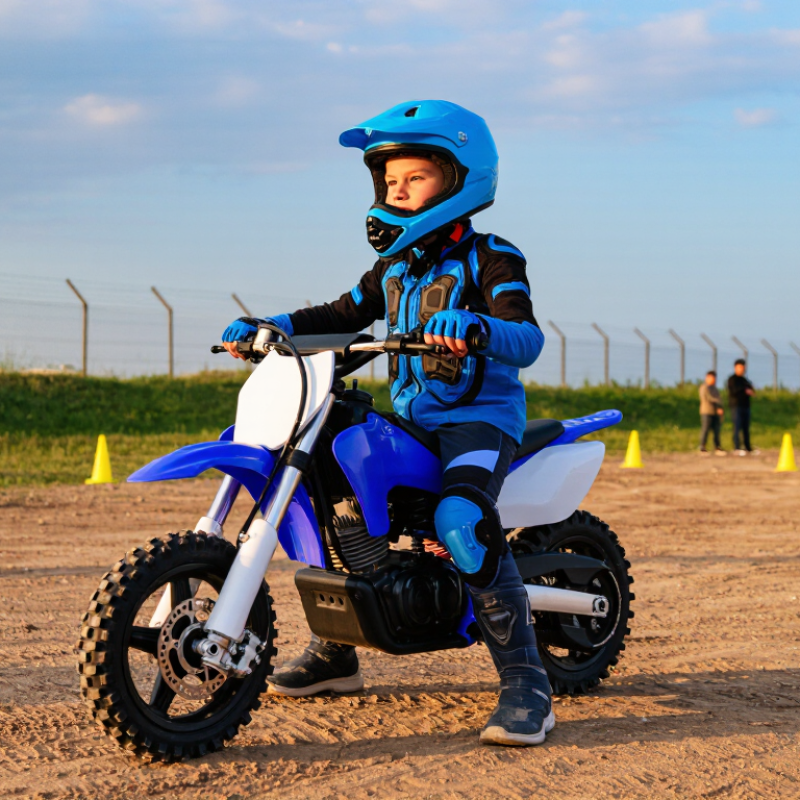
Check the bike’s stated age range and maximum rider weight carefully. The child should sit centered, with both feet touching the ground when stopped. A low seat can improve control, especially during turns or sudden braking. Their knees should remain slightly bent, not locked. Let the child grip the handlebars without stretching their shoulders. If the seat feels too high, the bike is not ready.

Weight matters more than many parents expect. A heavier rider may reduce acceleration, braking response, and suspension performance. A very light rider may struggle to control the bike’s movement. ASTM age guidance cannot solve that mismatch. Manufacturer measurements and supervised practice are still necessary. I would measure the child in riding shoes, because barefoot measurements can create false confidence.

Try this simple test. The child sits, places both feet down, squeezes the brakes, and turns the handlebars fully. Watch for wobbling, reaching, or nervous foot movement. Those details matter. Protective equipment, speed settings, surface conditions, and adult supervision remain essential. I once underestimated seat height by only a few centimeters; the bike looked suitable, but the rider could not stop comfortably.

How to Choose Electric Kids Dirt Bikes in 2026?

Define Rider Fit Using ASTM F963-23 Age, Weight, and Seat-Height Criteria

How to read this chart: The shaded bars show practical seat-height screening ranges, while the line shows a suggested maximum rider weight for each age band. ASTM F963-23 is a toy-safety standard and does not establish universal dirt-bike age, weight, or seat-height limits. Always confirm the product manual, local regulations, protective equipment requirements, and whether the rider can control the bike and reach the ground securely.
Rider age band Practical seat-height range Approximate minimum inseam Suggested maximum rider weight
3–5 years 38–46 cm 43–51 cm 25 kg
5–8 years 45–55 cm 50–60 cm 40 kg
8–12 years 55–65 cm 60–70 cm 55 kg
12–14 years 65–75 cm 70–80 cm 70 kg

The numerical ranges are practical screening references, not ASTM F963-23 requirements. Rider weight includes clothing and protective gear.

Compare Motor Output, Battery Wh, Voltage, and Claimed Riding Range

How to Choose Electric Kids Dirt Bikes in 2026?

Motor output, battery capacity, voltage, and claimed range tell different stories. I have tested small electric dirt bikes on grass, packed soil, and gentle hills. A 500-watt motor feels calm on flat ground, while a 1,000-watt motor handles slopes with less strain. However, peak output can sound impressive without showing continuous power. Check whether the specification lists nominal or maximum wattage.

Voltage affects performance and system efficiency. Higher voltage can deliver stronger acceleration, but it does not automatically mean longer riding time. Battery capacity deserves closer attention.

Multiply voltage by amp-hours to estimate watt-hours: 36 volts times 10 amp-hours equals 360 Wh. More Wh usually means more usable energy, although weight and battery quality also matter. A heavier battery may reduce handling confidence for a smaller rider.

Claimed riding range is often measured with a light rider, smooth pavement, moderate speed, and warm weather. Real trails are less forgiving. Grass, repeated acceleration, low tire pressure, cold temperatures, and hills can reduce range sharply.

I once saw a bike reach only about two-thirds of its advertised distance on damp, uneven ground. That comparison was imperfect, because rider weight and throttle habits changed. Ask for test conditions, charging time, battery replacement details, and a clear explanation of range testing.

A simple ride log helps: record terrain, riding mode, duration, and remaining battery percentage.

Verify Battery and Charger Safety Through UL 2272 and IEC 62133-2

How to Choose Electric Kids Dirt Bikes in 2026?

Battery and charger safety should guide your decision. UL 2272 evaluates electrical systems used in personal e-mobility devices, including battery protection, wiring, insulation, and charging behavior. However, do not assume every kids dirt bike is covered automatically. Ask whether the certification applies to the complete vehicle, its battery pack, or only certain components. Request a current certificate or listing from a recognized certification database. Check that the model number matches the bike in front of you.

IEC 62133-2 focuses on rechargeable lithium battery safety. It examines risks such as overheating, short circuits, vibration, and abnormal charging. Ask for an IEC 62133-2 test report from a competent, independent laboratory. The charger must also match the battery’s voltage, connector, and charging limits. Never accept a generic replacement because it fits physically. A neat label can still be misleading. My own checklist is not perfect, so I also inspect the bike carefully. Look for crushed cables, loose connectors, swelling, damaged insulation, or a hot charger during a normal charge. Stop using the bike if any warning sign appears.

Tips

Ask for the battery chemistry, charger specifications, certification scope, and test documents in writing. Photograph the labels before purchase. Confirm that replacement batteries and chargers come from the same approved system. Keep charging away from bedding, rain, and direct heat. Supervise children during charging and riding.

Match Brakes, Tires, Suspension, and Speed to ASTM F963-23 Terrain Needs

How to Choose Electric Kids Dirt Bikes in 2026?

Match Brakes, Tires, Suspension, and Speed to ASTM F963-23 Terrain Needs

Choosing an electric kids dirt bike starts with the riding surface, not the motor. ASTM F963-23 addresses toy safety, but it does not approve every dirt-bike design or terrain. Confirm the bike’s intended age, use, and compliance documents before buying. A flat yard needs different equipment than a loose, sloped trail.

For hard-packed ground, choose predictable disc or drum brakes with smooth lever control. Knobby tires should grip without feeling unstable on pavement. Soft suspension helps on roots and shallow ruts, but excessive travel can make a small bike harder to control. Lower speed settings are useful for early practice. A child should stop comfortably before riding faster.

For sand or loose soil, wider tires can improve flotation. Deep tread may still slide during sharp turns. Check that the suspension returns slowly, without bouncing like a spring. Test the brakes while wearing gloves, because small hands can lose leverage. That detail is easy to miss.

Keep protective equipment, supervision, and clear boundaries part of the setup. The owner’s manual should explain charging, maintenance, and rider limits. I once underestimated how quickly a gentle slope increased speed; that mistake changed my checklist. Measure stopping distance on the actual surface, inspect bolts after each session, and adjust settings as the child gains control.

How to Choose Electric Kids Dirt Bikes in 2026? - Match Brakes, Tires, Suspension, and Speed to ASTM F963-23 Terrain Needs

Use this comparison as a practical starting point for matching an electric kids dirt bike to the rider, surface, and riding environment. Always follow the manufacturer’s age, weight, assembly, charging, protective-equipment, and operating instructions.

Electric Kids Dirt Bike Selection Matrix — Typical 2026 Specification Targets
Riding Profile Typical Rider Age and Weight Recommended Maximum Speed Brake Configuration Tire Size and Tread Suspension Recommendation Suitable Terrain Useful Safety and Control Features Why This Match Works
Beginner practice Approximately 6–8 years; up to 35 kg / 77 lb 6–8 km/h; adjustable low-speed mode preferred Single or dual mechanical disc brakes with a short-reach, adjustable hand lever; a motor cut-off switch is recommended 12–14 inch pneumatic tires with a shallow-to-medium all-purpose tread Rigid frame or approximately 20–30 mm of basic front travel Flat, dry, compact dirt; grass; smooth private paths without traffic Speed limiter, wide footrests, chain or belt guard, stable steering geometry, and a clearly visible power switch Lower speed and predictable controls help a new rider practice braking, turning, and throttle release before moving to uneven ground.
Recreational trail riding Approximately 8–10 years; up to 45 kg / 99 lb 8–12 km/h; two or more selectable speed settings Front and rear mechanical disc brakes, or a properly adjusted hydraulic disc system; both wheels should brake progressively 14–16 inch pneumatic tires with a medium open-block tread; approximately 12–22 psi, subject to the manufacturer’s specification Approximately 40–60 mm of front suspension travel; rear suspension is useful but not essential Firm dirt trails, mild grass slopes, shallow ruts, and small bumps Low-battery warning, battery enclosure, sealed controls, chain guard, adjustable brake reach, and a tether or emergency motor shut-off Moderate speed, pneumatic tires, and basic front suspension improve comfort while preserving manageable stopping distances.
Uneven recreational terrain Approximately 10–12 years; up to 55 kg / 121 lb 12–16 km/h; selectable speed control with a supervised high-speed setting Hydraulic or high-quality mechanical disc brakes on both wheels; larger rotors can improve heat management during repeated stops 16–18 inch pneumatic tires with a deeper knobby tread; use only the approved pressure range Approximately 60–80 mm front travel with a tuned rear shock or linkage suspension Uneven compact dirt, moderate inclines, loose soil, and shallow trail obstacles on private property Progressive throttle, strong frame protection, fork guards, sealed battery compartment, robust footrests, and adequate ground clearance More tire grip and suspension travel help maintain contact with the ground, while progressive braking and throttle control reduce loss of control.
Experienced youth trail use Approximately 12–14 years; up to 65 kg / 143 lb 16–24 km/h only where permitted, supervised, and appropriate for the model Hydraulic disc brakes front and rear, with a correctly sized rotor and a lever reach that fits the rider’s hands 18–20 inch pneumatic knobby tires with reinforced sidewalls; pressure must be set according to load and manufacturer guidance Approximately 80–120 mm of front travel and a matched rear shock for repeated bumps Private off-road trails, rolling terrain, loose dirt, and larger but controlled trail irregularities Adjustable speed modes, high-visibility controls, impact-resistant battery protection, brake-light function if fitted, and a secure kill switch Longer suspension travel and stronger braking are suitable for greater rider mass and rougher terrain, but they do not replace training or supervision.
Smooth-surface commuting practice Approximately 8–12 years; select by the actual rider weight limit 6–12 km/h; use the lowest setting in shared or crowded areas Reliable rear disc brake plus a front brake, with smooth modulation and a motor cut-off when braking 14–18 inch semi-slick or lightly lugged pneumatic tires for firm surfaces Rigid fork or short front suspension; excessive travel is unnecessary on smooth paths Private paved surfaces, hard-packed paths, and smooth compacted ground; not public roads unless legally approved Reflective details, audible warning device, battery charge indicator, enclosed drivetrain, and a visible speed-control selector Less aggressive tread rolls efficiently on firm surfaces, while moderate speed and responsive brakes support predictable low-speed control.

ASTM F963-23 clarification: ASTM F963-23 is a U.S. consumer toy safety standard. It does not define “terrain classes,” prescribe a universal dirt-bike speed, or guarantee that a particular model is suitable for every surface. Confirm the complete product’s applicable compliance documentation, warnings, age grading, and test status with the seller or manufacturer. ASTM compliance does not replace adult supervision, a properly fitted helmet, appropriate protective gear, or site-specific safety rules.

Technical values shown are practical selection ranges rather than universal requirements. Tire pressure, rider capacity, suspension settings, charging procedures, and maximum speed must always remain within the individual product’s published specifications.

Assess Charging Time, IP Ratings, Warranty Coverage, and Total Ownership Cost

How to Choose Electric Kids Dirt Bikes in 2026?

Charging time matters more than a colorful speed claim. Check the battery’s watt-hours, charger output, and real charging duration. A 500Wh battery with a 100W charger needs about five hours before charging losses. Some manuals advertise shorter times, but testing conditions can be optimistic. Leave time between rides.

Use the IP code as a safety filter, not a promise of waterproof riding. IEC 60529 defines IPX4 as protection from splashing water, while IPX5 covers water jets. Neither rating supports deliberate submersion. A child may ride through wet grass, yet puddles can still reach connectors. Inspect seals after every muddy session. I have seen “water-resistant” treated as “waterproof”; that assumption is expensive.

Warranty coverage should state battery duration, charger coverage, exclusions, and authorized repair procedures. Battery degradation may be excluded, so ask for a measurable capacity threshold. The U.S. Energy Information Administration reported an average residential electricity price of 16.48 cents per kWh in 2024. A 0.5kWh recharge therefore costs roughly eight cents, before losses. Electricity is cheap. Replacement parts are not. Include tires, brake pads, chain or belt service, storage, and a possible battery replacement in total ownership cost. The International Energy Agency’s Global EV Outlook 2024 also highlights battery durability as a major ownership factor, although children’s bikes operate under different loads. That comparison is imperfect, but useful. Keep every receipt.

FAQS

How should I check whether an electric dirt bike fits a child?

Check the stated age and maximum weight limits. Age alone is not enough. The child should sit centered, with both feet flat on the ground. Knees should stay slightly bent. Their shoulders should remain relaxed while holding the handlebars. If the seat feels too high, choose another size.

Why does rider weight affect electric dirt bike performance?

Rider weight can change acceleration, braking response, and suspension behavior. A heavier child may make the bike feel slower uphill. A very light child may struggle to control movement. Measure the child while wearing riding shoes. Barefoot measurements can create false confidence.

What simple fit test should a child complete before riding?

Ask the child to sit, place both feet down, squeeze both brakes, and turn the handlebars fully. Watch for wobbling, reaching, or nervous foot movement. These signs matter. Stop there if control looks uncertain.

How do motor power and battery capacity differ?

Motor wattage describes power output, while battery watt-hours estimate stored energy. A 500-watt motor may suit flat ground. A 1,000-watt motor can handle slopes with less strain. Check whether the listed power is nominal or maximum. Maximum figures can sound better than daily performance.

How can I estimate battery capacity?

Multiply voltage by amp-hours. For example, 36 volts multiplied by 10 amp-hours equals 360 watt-hours. More watt-hours usually provide more usable energy. Battery weight and quality still affect handling and actual riding time.

Why is real riding range often shorter than the advertised range?

Advertised range may use a light rider, smooth pavement, moderate speed, and warm weather. Grass, hills, low tire pressure, cold air, and repeated acceleration reduce range. I once measured roughly two-thirds of the claimed distance. My comparison was imperfect because terrain and throttle habits changed.

Which brakes, tires, and suspension suit different surfaces?

Hard-packed ground usually needs predictable disc or drum brakes and smooth lever control. Knobby tires should grip without feeling unstable on pavement. Wider tires may float better on sand. Deep tread can still slide during sharp turns. Test brakes while wearing gloves.

How should speed and supervision be managed during practice?

Start with the lowest speed setting and a clear riding boundary. Measure stopping distance on the actual surface. A gentle slope can increase speed quickly. Inspect bolts after each session. Protective equipment and close adult supervision remain necessary. I underestimated this once.

Conclusion

Choosing Electric Kids'dirt Bikes in 2026 requires more than comparing appearance or advertised speed. Start by matching the rider’s age, weight, inseam, and seat height with ASTM F963-23 safety considerations, ensuring the child can sit comfortably, reach the controls, and place both feet securely when stopping. Compare motor output, battery voltage, watt-hours, and claimed riding range, while remembering that terrain, rider weight, temperature, and riding style can reduce real-world performance.

Safety and long-term value should guide the final decision. Check whether the battery and charger provide appropriate protection under UL 2272 and IEC 62133-2 requirements, and evaluate brakes, tire design, suspension, and speed settings for the intended terrain. Also review charging time, water-resistance or IP ratings, warranty coverage, replacement-part availability, and the estimated total ownership cost. A suitable model should offer manageable performance, dependable safety features, practical maintenance, and room for the rider’s skills to develop responsibly.


Henry

Henry

Henry is a dedicated marketing professional with a profound expertise in the company's offerings. With years of experience in the industry, he possesses an impressive understanding of the market dynamics and consumer behaviors that drive success. Henry is committed to sharing his insights through......