How to Choose Electric Dirt Bike Accessories?

Time:2026-10-24 Author:Sophia
0%

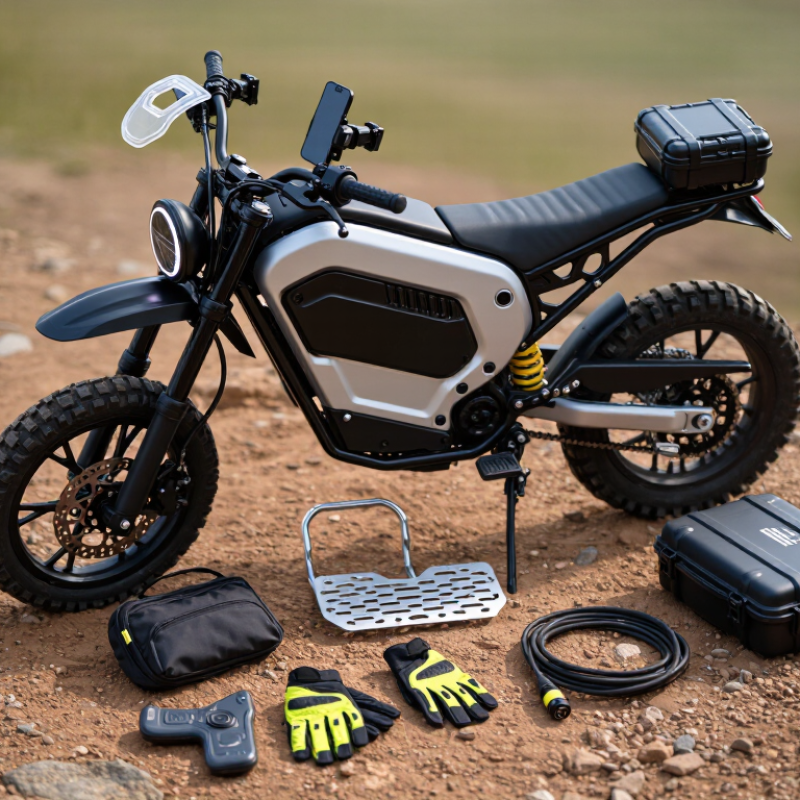
Choosing Electric Dirt Bike Accessories is not about adding the most equipment. It is about matching each component to your riding conditions, motorcycle, and actual experience. A beginner needs different protection from a trail rider, while a competition rider may prioritize weight and rapid adjustment. Before buying, inspect your bike’s mounting points, battery clearance, connector type, and manufacturer limits. A loose handguard or poorly routed cable can become a serious distraction on rocky ground.

Anton Wass, CEO of Stark Future, has described electric motorcycles as “a completely new way of experiencing performance.” That idea also applies to accessories. Electric bikes deliver quiet power, instant torque, and different heat patterns. Their accessories should respect those characteristics. A skid plate must protect the motor without blocking cooling airflow. A charging case should resist dust and moisture, not merely look strong online. Quality gloves should improve grip around a smooth throttle, especially when mud covers the fingertips.

Real-world testing matters more than attractive product photos. Place a tool pouch on the bike and check whether it touches your knees while standing. Test a phone mount on a rough path before trusting it on a long ride. Some accessories seem useful but add unnecessary weight. I have learned that lesson through repeated setup changes. More equipment is not always better.

This guide will examine protection, storage, charging support, comfort, visibility, and maintenance tools. It will also question popular choices when their benefits appear uncertain. The best setup may look simple. More importantly, it should remain secure, practical, and compatible with safe riding habits.
How to Choose Electric Dirt Bike Accessories?

Identify Bike Voltage, Motor Power, and Battery Connector Compatibility

How to Choose Electric Dirt Bike Accessories?

Start with the bike’s nominal voltage, not the charger label. A 48-volt battery usually needs a 48-volt controller, display, and compatible accessories. Higher-voltage parts can damage low-voltage circuits. Lower-voltage parts may overheat while charging. Check the motor’s continuous power rating, then compare its peak demand with the controller’s output. A 1,000-watt motor may briefly demand much more than 1,000 watts.

Small errors matter.

The International Energy Agency’s Global EV Outlook 2024 reports that electric two- and three-wheelers represent more than half of the global electric vehicle fleet. That growth increases the need for accurate component matching. Before buying, photograph the battery connector and count its pins. Confirm polarity, pin layout, wire thickness, and current rating. Matching shapes are not enough. Some connectors carry communication signals for the battery management system.

Use a multimeter only if you understand safe electrical testing. Otherwise, ask a qualified technician to verify the system. The U.S. Consumer Product Safety Commission recorded 407 micromobility fires and 24 deaths in 2023. Its figures cover e-bikes and e-scooters, not every electric dirt bike, but they show why battery compatibility deserves careful attention. Accessories should also suit recognized electrical safety requirements, such as those addressed by UL 2272. A connector can fit perfectly and still be electrically wrong. That is the mistake worth reconsidering.

Select Chargers Using Battery Chemistry and 80%–90% Charging Limits

How to Choose Electric Dirt Bike Accessories?

Choosing a charger starts with the battery chemistry, not the plug shape. Lithium-ion and lithium iron phosphate batteries need different voltage profiles. A charger for the wrong chemistry can trigger heat, reduce capacity, or damage the battery management system. Check the battery label, manual, and required output voltage before buying. Match the connector carefully. It should fit firmly without force or looseness.

For everyday riding, charging to 80%–90% can reduce battery stress and preserve usable capacity. This limit matters most when the bike rests overnight or between short rides. However, a longer trail session may justify a full charge. Follow the battery maker’s stated limits, because charging rules vary between cell designs. Never guess from charger color or connector size.

Use the charger in a dry, ventilated area. Keep it away from fuel, rain, and covered bedding. A cool battery usually charges more reliably than one that just finished a hard ride. I once assumed a slower charger was always safer, but heat, poor ventilation, and incorrect voltage mattered more. That shortcut was careless. Inspect the cable regularly, and stop charging if you notice swelling, unusual odor, damaged insulation, or excessive heat. A simple temperature check can reveal problems early, although it cannot replace professional testing.

Choose Protective Gear Meeting EN 1078, ASTM F1952, and ANSI Z87.1 Standards

Choosing electric dirt bike accessories starts with certified protection, not color or convenience. EN 1078 covers helmets for bicycles and similar wheeled activities. ASTM F1952 addresses downhill mountain-bike helmets, including demanding impact conditions. These standards are useful references, but they are not interchangeable. Check the exact marking inside the helmet.

For fast trails, a full-face helmet can protect the jaw and cheeks from stones, branches, and hard landings. Secure the chin strap under your jaw. It should feel firm without causing pressure points. ANSI Z87.1-rated eye protection helps resist impact from dust, gravel, and flying debris. Clear lenses suit shaded woods. Tinted lenses may reduce glare in open terrain. Do not use ordinary sunglasses.

The World Health Organization reports that quality helmets can reduce fatal injury risk by about 42% and brain injury risk by about 69%. NHTSA’s 2022 data estimated that motorcycle helmets saved 1,872 lives in the United States. Electric dirt bikes are different, yet the protection lesson remains relevant. Standards do not replace fit, inspection, or riding judgment. A cracked shell, loose visor, or scratched lens deserves replacement. I have seen riders focus on gloves and forget eye protection. That mistake is easy to repeat. Check the certification label before every ride.

Match Tires, Suspension, and Brakes to Terrain and Rider Weight

How to Choose Electric Dirt Bike Accessories?

Terrain decides the starting point. On hardpack, choose tires with closely spaced knobs for predictable cornering and braking. Loose sand needs wider, taller knobs that clear quickly. Mud demands open spacing, but those tires can feel vague on rocks. The Tire and Rim Association’s 2024 Year Book links inflation pressure with load, casing strength, and rim limits. Lower pressure may improve grip, yet it also raises pinch-flat risk. Check pressure after the tire cools, not after a fast ride.

Suspension should match the rider’s ready-to-ride weight, including protective gear and accessories. A spring that is too soft causes excessive sag and harsh bottoming. A spring that is too stiff reduces traction over roots. Many professional off-road setup procedures begin near 30 percent rider sag, then adjust compression damping in small steps. Electric motors deliver immediate torque. That can expose poor rear-tire grip quickly. I would rather accept a slower rebound setting than chase speed with an unstable rear end.

Brake selection follows terrain and heat. Steep descents need consistent modulation and enough rotor capacity for repeated stops. Wet trails reward a controllable initial bite, not an aggressive lever response. NHTSA’s Traffic Safety Facts 2022 reported that motorcyclists faced about 22 times the passenger-vehicle fatality rate per mile traveled. That statistic is not specific to dirt bikes, but it reinforces careful braking choices. My first setup was too firm. I mistook resistance for control. Testing one change at a time is slower, but more reliable.

How to Choose Electric Dirt Bike Accessories?

Match tires, suspension, and brakes to terrain and rider weight.

The chart shows a practical setup-priority index from 1 to 5 for a 70–95 kg rider. Lower tire pressure improves traction on sand, while higher pressure helps protect the rim on rocky terrain. Suspension adjustment becomes more important as terrain gets rougher, and brake capacity is especially important on steep downhill sections. For riders above 95 kg, use a firmer spring rate, verify sag, and consider increasing tire pressure within the tire manufacturer's safe range.

Verify Water Resistance, Using IP Ratings, Range, and Accessory Load Data

How to Choose Electric Dirt Bike Accessories?

Water resistance should be checked before appearance or price. The IEC 60529 standard defines IP protection levels for dust and water. An IP54 rating offers limited dust protection and resistance to water splashes. IP65 adds dust-tight protection and resistance to water jets. However, neither rating approves pressure washing or deep submersion. Mud can hide weak seals around switches, connectors, and cable entries. Check the complete accessory rating, not only the lamp or controller.

Range also changes with accessory demand. SAE J2982 provides guidance for evaluating electric motorcycle performance, but controlled tests rarely match steep, muddy trails. A 100-watt heated grip used for two hours consumes about 200 watt-hours. That energy may equal a meaningful part of a small off-road battery.

GPS units, cooling fans, auxiliary lights, and phone chargers add smaller loads. Add their wattage, multiply by operating hours, and compare the result with usable battery capacity. Leave a reserve for cold weather, hills, and soft ground. This calculation is simple, but I still underestimate trail resistance sometimes.

Accessory load data deserves careful inspection.

Look for rated voltage, continuous watts, peak watts, fuse requirements, and connector limits. A component drawing 8 amps at 12 volts uses 96 watts. The bike’s converter must support that load continuously, not briefly. Industry electrical-safety guidance recommends protecting circuits against overload and moisture entry. Secure cables above splash zones, with drip loops near connectors. My earlier mistake was trusting a sealed housing while ignoring the exposed plug. Testing one accessory after a wet ride reveals more than a specification sheet.

FAQS

What voltage should I check before buying electric dirt bike accessories?

Check the battery’s nominal voltage first. A 48-volt battery usually needs a 48-volt controller, display, and compatible accessories. Higher-voltage parts can damage low-voltage circuits. Lower-voltage parts may overheat during charging.

How should I match the motor and controller?

Check the motor’s continuous power rating, then compare its peak demand with the controller’s output. A 1,000-watt motor may briefly require much more power. Small errors matter.

How can I confirm battery connector compatibility?

Photograph the connector and count its pins before ordering. Confirm polarity, pin layout, wire thickness, and current rating. A matching shape proves very little. Some connectors also carry battery communication signals.

Is a charger safe if its plug fits the battery?

No. Match the charger to the battery chemistry and required output voltage. Lithium-ion and lithium iron phosphate batteries use different charging profiles. Never guess from plug size or charger color.

Should I charge the battery to 100% every time?

For everyday riding, an 80%–90% limit may reduce battery stress. A full charge can make sense before a longer trail session. Follow the battery’s stated charging limits. Battery designs vary.

Where should I charge the battery?

Use a dry, ventilated area away from rain, fuel, and covered bedding. Let a hot battery cool after hard riding. Stop charging if you notice swelling, unusual odor, damaged insulation, or excessive heat. A slower charger is not automatically safer.

What protective gear should an electric dirt bike rider choose?

Choose a correctly certified helmet with a secure chin strap. Full-face protection can shield the jaw and cheeks from stones, branches, and hard landings. Use impact-rated eye protection, not ordinary sunglasses.

Which helmet and eye-protection markings should I check?

Look for relevant markings such as EN 1078 or ASTM F1952 inside the helmet. Impact-rated eye protection may follow ANSI Z87.1 requirements. These standards are not interchangeable. Check the exact label.

When should I replace protective equipment?

Replace a helmet after serious impact, visible cracks, or a loose visor. Replace scratched eye protection when it limits clear vision. I once focused on gloves and forgot eye protection. That was careless.

Conclusion

Choosing the right Electric Dirt Bike Accessories starts with confirming your bike’s technical requirements. Check the system voltage, motor power, and battery connector before purchasing electrical components or replacement parts. Chargers should match the battery’s chemistry and should support safe charging limits, typically stopping at around 80%–90% when recommended for battery longevity. Protective equipment is equally important, so select helmets and eye protection that meet recognized standards such as EN 1078, ASTM F1952, and ANSI Z87.1.

Accessories should also match your riding environment and personal needs. Select tires, suspension settings, and brake components according to the terrain and the rider’s weight to improve control and stability. For outdoor use, review water-resistance information through IP ratings, and compare the bike’s expected range with the additional load created by lights, storage, or other accessories. A careful balance of compatibility, safety, durability, and performance will help create a more reliable and enjoyable riding setup.


Sophia

Sophia

Sophia is a dedicated marketing professional with an exceptional depth of knowledge about her company's products and services. With a keen understanding of market trends and customer needs, she crafts insightful blog posts that not only inform but also engage readers, enriching the company’s online......