For many entertainment venues, vehicle choice shapes both customer satisfaction and daily operating performance. An Electric Go-Kart can create a cleaner, quieter, and more controlled racing environment. Guests notice quieter laps. Operators notice easier communication and fewer routine engine-related tasks.
Electric motors deliver immediate torque, helping drivers experience smooth acceleration from the starting line. They also reduce local exhaust emissions, which can improve indoor air quality when the venue has suitable ventilation. These benefits matter in family entertainment centers, resorts, and dedicated racing facilities. However, the decision requires more than comparing purchase prices. A reliable charging plan must match peak operating hours, available electrical capacity, and seasonal demand. Battery performance may change with temperature, age, and driving patterns. That assumption can fail.
Experienced managers should examine track length, fleet size, charging access, and expected daily sessions. They should also review emergency procedures, speed controls, protective equipment, and local safety requirements. Reputable suppliers can provide maintenance schedules, battery guidance, training materials, and technical support. Independent inspections and clear service records strengthen operational reliability. Small details matter, such as checking tire wear before opening or recording unusual charging behavior.
The strongest business case combines customer experience with measurable operating discipline. An Electric Go-Kart is not a perfect solution for every venue. Initial investment, charging infrastructure, and battery replacement require careful planning. Still, practical testing, supplier evaluation, and honest cost analysis can reveal whether electric racing fits the business. Sometimes, the quietest improvement is the one customers remember.
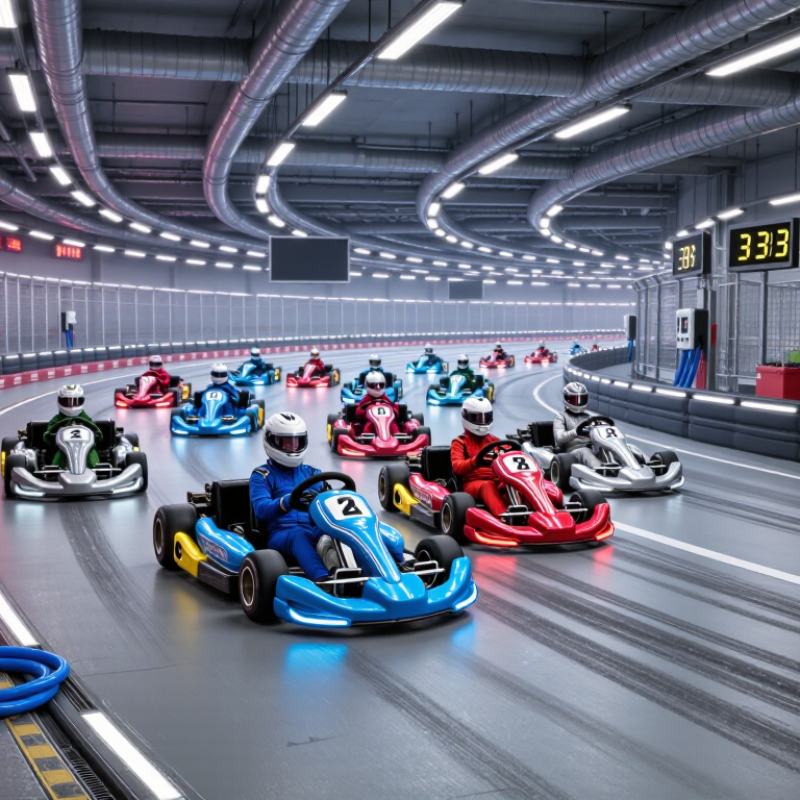
Understanding Electric Go-Karts in Commercial Operations
Commercial go-kart decisions should begin with operating conditions, not acceleration videos.
Electric models fit indoor tracks because they produce no tailpipe emissions during operation. This can reduce ventilation pressure and improve the customer experience near waiting areas. The International Energy Agency reported nearly 14 million electric cars sold worldwide in 2023. That broader shift matters because it expands technician skills, charging knowledge, and battery supply chains.
Energy efficiency also affects daily operating costs. The U.S. Department of Energy states that electric vehicles convert more than 77% of grid energy into wheel movement. Gasoline vehicles typically convert only 12–30%. For a busy track, that difference appears during repeated sessions, especially when karts queue for charging. A basic energy meter can reveal whether the fleet, chargers, or building supply creates the real bottleneck.
Operations still require discipline. Managers should record lap counts, charging time, tire wear, brake inspections, and battery temperature. ISO 17842 provides safety principles for amusement rides, but compliance depends on actual maintenance practices. A quiet electric kart can hide unusual vibration. That is easy to miss. Charging capacity may also be underestimated during weekend peaks. I would not promise lower costs without local electricity rates, staffing expenses, replacement schedules, and insurance requirements. Pilot testing ten karts for several weeks can expose practical issues before a full fleet purchase.
Business Models and Customer Experiences They Support
An electric go-kart fleet can support several business models, not just hourly racing. Indoor entertainment centers can sell timed heats, family packages, and repeat-visit memberships. Hotels, resorts, and mixed-use venues may use compact tracks as paid attractions. Corporate event operators can reserve sessions for team activities, with staff managing briefings and timing. Each model depends on throughput, track layout, and local operating requirements.
The customer experience begins before the first lap. Clear booking, visible pricing, and a short safety briefing reduce uncertainty. Quiet electric motors make conversation easier near the pit area. A smooth launch, responsive controls, and consistent speed help beginners feel capable. Experienced drivers still expect accurate lap timing and fair session rules. Operators should inspect steering, brakes, restraints, batteries, and charging areas every day. It is not glamorous.
Memberships create useful data about visit frequency, peak hours, and customer drop-off. Managers can adjust session length or staffing without guessing. A family-focused venue may prioritize gentle acceleration and shared viewing spaces. A performance-focused venue may offer advanced sessions, but only after clear instruction. I have seen operators overvalue top speed and undervalue queue design. That choice can produce excitement, but also frustration. Electric karts can reduce noise and local exhaust concerns, yet they still require disciplined maintenance and honest communication.
How Electric Power Affects Costs and Daily Operations
For a business running a kart track, electric power changes more than the engine room. It reshapes daily spending, staff routines, and customer flow. From hands-on track operations, predictable charging costs seem easier to track than frequent fuel purchases. Electricity also supports simpler drivetrains, which can reduce routine maintenance. However, battery care still demands discipline. Neglected charging habits may shorten battery life and create expensive downtime.
A typical operating day begins with a battery check, tire inspection, and charge-level review. Staff can prepare karts quietly before opening, without fuel odors or engine warm-up periods. That quieter start helps conversations with customers and nearby businesses. During busy hours, electric karts deliver consistent acceleration across repeated sessions. This makes timing easier for operators and less surprising for beginners. Yet charging can become a bottleneck when every kart returns low at once. A spare charging plan, load monitoring, and staggered sessions matter. Not always.
Operating costs are not automatically lower. Battery replacement, electrical upgrades, and charging equipment can change the calculation. A careful owner should compare energy use, labor hours, maintenance records, and seasonal demand. Keep real numbers from each session. Assumptions age quickly. Electric drivetrains may reduce oil changes and mechanical repairs, but technicians still need high-voltage training. Reliable procedures protect equipment and people. The practical choice depends on track length, session volume, local electricity rates, and staff consistency.
Safety, Maintenance, and Facility Requirements
Choosing an electric go kart for a business changes more than the vehicle choice. It affects daily safety checks, staff training, charging routines, and track design. In practice, operators should inspect tires, steering, brakes, seat belts, and emergency stop systems before opening. One loose wheel can create a serious problem.
Keep the track separated from spectators with strong barriers and clear entry points. A smooth, well-drained surface reduces unexpected slides, especially after cleaning or rain. Operators need direct visibility across corners, not just cameras. Staff should explain speed controls, overtaking rules, and stopping procedures before every session. Keep it simple. Children and first-time drivers may forget instructions under pressure.
Maintenance becomes easier when every check is recorded. Log battery condition, charging time, unusual sounds, damaged bodywork, and brake response. Electric systems are quieter, so mechanical problems may be harder to notice. Charging areas need suitable ventilation, controlled access, dry flooring, and equipment approved for the vehicle system. Never treat a charging room as ordinary storage. Local fire and building requirements must guide the layout.
Facility planning also needs space for queues, helmets, cleaning, repairs, and emergency access. I have seen attractive layouts fail because staff could not move quickly around parked vehicles. That detail is easy to miss. A written risk assessment should be reviewed after incidents, near misses, seasonal changes, or equipment upgrades. No plan stays perfect for long.
Why Choose an Electric Go Kart for Your Business?
A practical comparison of selected maintenance and facility requirements
The chart marks whether each item is typically needed (1) or not typically needed (0). Electric karts avoid routine engine oil changes and on-site exhaust during operation, but require suitable charging access. Both types need appropriate safety procedures; actual requirements depend on the kart, venue, and local regulations.
Assessing Revenue Potential and Long-Term Business Value
Choosing an electric go-kart requires more than comparing purchase prices. The real question is revenue per operating hour. Allied Market Research valued the global go-kart market at about USD 117 million in 2021. Its forecast suggests continued growth through 2031, supported by indoor entertainment and family recreation demand. This creates opportunity, but demand alone does not guarantee profit.
Consider a 12-kart indoor track with ten-minute race cycles. At six operating hours and 70% average utilization, it could sell about 504 rides daily. At USD 20 per ride, daily ticket revenue could reach USD 10,080 before staffing, rent, taxes, and maintenance. That figure looks attractive. It is also optimistic. Weekday traffic, seasonal demand, and occasional equipment downtime can reduce actual sales sharply.
Electric models may strengthen long-term value through quieter operation, simpler routine servicing, and lower local exhaust emissions. The International Energy Agency reports that global electricity demand continues to expand alongside transport electrification, making energy planning increasingly important for operators. However, battery replacement, charging capacity, and software support need separate budget lines. A weak charging layout can create queues and lost sessions. A strong one keeps the track moving.
Operators should measure utilization hourly, not monthly. They should also track battery cycles, maintenance minutes, repeat visits, and revenue per customer. These details reveal whether the karts create durable business value or merely impressive opening-day traffic.
FAQS
They produce no tailpipe emissions during operation. This can reduce ventilation pressure and improve comfort near waiting areas. Quiet operation helps customers talk near the pit area. However, ventilation planning still needs professional review.
Track lap counts, charging times, battery temperatures, tire wear, and brake inspections. Use an energy meter to identify bottlenecks. The fleet, chargers, or building supply may cause delays. Pilot testing helps.
Testing ten karts for several weeks can reveal charging, maintenance, and queue problems. Record daily performance, not just opening-day excitement. Our first estimate may be wrong.
Operators can sell timed races, family packages, memberships, hotel attractions, or private group sessions. Each model depends on track capacity, staffing, layout, and local requirements. One model may not fit every venue.
Provide clear booking details, visible prices, and short safety briefings. Gentle acceleration helps beginners feel confident. Accurate lap timing supports experienced drivers. Queue design matters.
Inspect steering, brakes, restraints, batteries, tires, and charging areas before opening. Listen for unusual vibration, even when the kart is quiet. That problem is easy to miss. Maintenance is not glamorous.
Calculate revenue per operating hour, not only total monthly sales. For example, twelve karts running ten-minute cycles could sell about 504 rides daily at 70% utilization. At twenty dollars per ride, gross ticket revenue could reach 10,080 dollars before expenses. That figure is optimistic.
Include electricity, rent, staffing, insurance, maintenance, battery replacement, charging upgrades, and software support. Seasonal demand and equipment downtime can reduce sales sharply. Lower operating noise does not guarantee higher profit.
Conclusion
Choosing an Electric Go-Kart for your business can support a cleaner, quieter, and more flexible commercial operation. These vehicles are suitable for indoor and outdoor entertainment venues, family recreation centers, hospitality properties, and other customer-focused businesses. Their smooth acceleration and easy handling can create enjoyable experiences for beginners, families, and returning visitors, while allowing operators to develop models such as timed races, group activities, memberships, and special events.
Electric power can help simplify daily operations by reducing fuel-related expenses, minimizing noise, and supporting predictable energy use. With fewer mechanical components than traditional fuel-powered vehicles, an Electric Go-Kart may also require less routine maintenance, although batteries, brakes, tires, charging systems, and safety equipment still need regular inspection. A suitable facility should provide a well-designed track, clear rules, trained staff, charging areas, ventilation where necessary, and effective customer-flow management. By evaluating ticket pricing, operating capacity, maintenance costs, energy consumption, and repeat-visit potential, business owners can determine whether electric karting offers sustainable revenue and long-term value.

 Tengyue